Vegetable Names in English for Kids
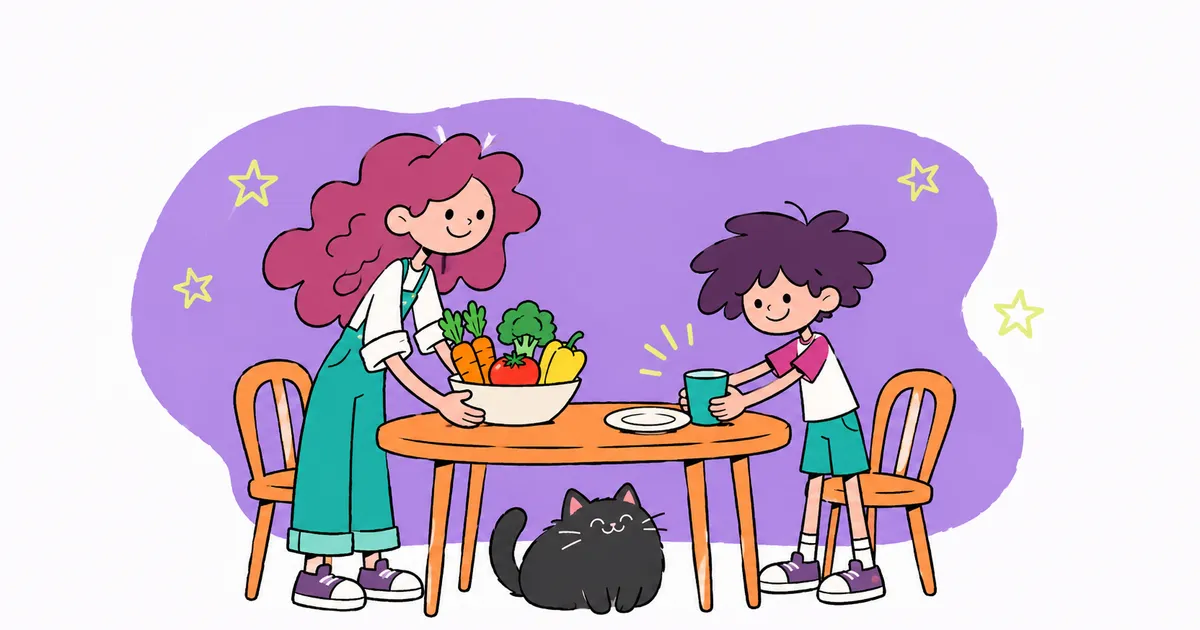
Vegetable Names in English for Kids can begin with 24 words children see in shops, kitchens, meals, and picture books. Start with carrot, potato, tomato, and onion, then add less familiar words in small groups. Children need labels and short phrases such as “a red pepper,” “three peas,” and “I like cucumber.” Real food, toys, drawings, and sorting games give words meaning. Aim for brief chances to notice, say, and practise each word.
📥 Vegetable Word and Sentence Practice
Name vegetables, build useful phrases, and practise common grammar.
Leave your email — we'll send the PDF to your inbox.No spam — the PDF plus one short reminder. Unsubscribe anytime.
Start with a Useful Set of Words
When teaching Vegetable Names in English for Kids, choose words from your child’s daily life. A child who helps with shopping may learn cabbage and spinach early; another may meet them through stories or cooking.
The table presents 24 vegetable words with phrases showing natural usage. Regional alternatives help international families recognise forms used in books, videos, and lessons.
Food English groups tomato with vegetables, although botany classifies it as fruit. Older children can explore the difference; younger learners need the food word and an example.
Build Phrases Before Longer Sentences
Practise Vegetable Names in English for Kids by expanding each word. Begin with “carrot,” add colour or size—“a long carrot”—then build a sentence: “The rabbit has a long carrot.” This sequence introduces vocabulary without excess grammar.
Choose reusable sentence frames: “This is a ___,” “I can see ___,” “We need two ___,” and “Do you like ___?” With uncountable food words, say “We need some spinach.” For plurals, try “There are five peas.”
Questions turn vocabulary into conversation: “Which vegetable is green?”, “What is in the soup?”, or “Would you choose carrots or beans?” Accept one word, then model a fuller reply: “Beans” becomes “I would choose green beans.”
Choose Activities That Match Your Child’s Age
For school-age kids, teach four to six words at once. Put real vegetables, toy food, or picture cards on a table. Say, “Touch the potato,” “Give me the onion,” or “Put the carrot next to the cucumber.” Movement conveys meaning before speech.
For school-age kids, add sorting and memory tasks. Group vegetables by colour, edible plant part, or whether children have tried them. Learners can cover table labels, name each picture, and check their answers.
For school-age kids, practise with menus, recipes, and shopping plans. Ask learners to choose vegetables for a meal and explain why. Older children can compare courgette and zucchini or aubergine and eggplant without marking either form wrong.
Practise Through Meals, Play, and Lessons
Vegetable Names in English for Kids become easier to recall across different settings. Name two vegetables while unpacking groceries, cooking, or reading a menu. Keep exchanges brief: “What is this?” “It is broccoli.” “What colour is it?” “It is green.”
In pretend play, children can run a market, pack lunch, or make paper-picture soup. During online lessons at LearnLink, our tutors can practise the words through questions, choices, descriptions, and role-plays. Families around the world may use different names at home, making home-language words a bridge to English.
Five-minute Kitchen Challenge
Choose three vegetables. Your child names each one, adds a describing word, and makes a sentence. For example: “onion,” “a small onion,” “The small onion is in the basket.” Hide one item and ask, “Which vegetable is missing?”
Repeat with new combinations instead of adding extra words. Focus one day on colours and another on numbers, preferences, or meals. Each task gives familiar vocabulary a new purpose.
Correct Common Word Choice and Grammar Mistakes
Errors often involve countable and uncountable nouns rather than memory. Correct the phrase gently. If your child says, “I like carrot,” answer, “Yes, you like carrots.” The reply models natural grammar without creating a test.
Practise pronunciation briefly and calmly. Break longer words into parts: cu-cum-ber, cau-li-flow-er, and au-ber-gine. Repeat each whole word at normal speed so children hear its natural rhythm.
Use a Simple Weekly Routine
A weekly plan for Vegetable Names in English for Kids needs short review sessions. Introduce four words on day one, then sort or match them. Later, practise through questions, shopping lists, drawings, or pretend play.
Keep “known words” and “learning words” piles. Move a card when your child understands the word in a direction and uses it in a phrase. Naming one picture shows recognition; varied practice shows deeper knowledge.
Finish with a practical task: plan a colourful salad, label a market picture, or describe kitchen vegetables. Praise specifics: “You remembered the plural potatoes,” or “You used three colour words.”
- Choose five vegetable picture cards and say each English name together.
- Sort the cards by color, then repeat every vegetable name aloud.
- Match each card to a real vegetable during your next meal.
- Ask your child to point to three vegetables you name.
- Review all five names at week’s end and celebrate correct answers.
When a word has several meanings or pronunciations, Cambridge Dictionary is a useful check before turning it into child-friendly examples.
Frequently Asked Questions
How Many Vegetable Words Should My Child Learn at One Time?
Start with four to six words for a young beginner, then adjust to your child’s response. Practise the set through several short activities before adding more. An older learner may manage eight to ten words, especially when several are familiar. Focus on using each word in phrases, questions, and sentences rather than finishing the table quickly.
Should We Teach British or American Vegetable Names?
Choose the form your child meets most often, but present regional alternatives as equal options. Vegetable Names in English for Kids may include courgette/zucchini, aubergine/eggplant, and beetroot/beet. Children can use one form consistently while recognising the other, supporting communication across regional books, videos, and speakers.
Can My Child Use Other Home Languages During Practice?
Yes. Your child can name a vegetable in a familiar language before adding its English name. The connection gives the new label meaning and respects existing knowledge. Once secure, ask questions and play games mainly in English. Use the home language for understanding or comparison rather than testing every translation.
What If My Child Does Not Like Eating Vegetables?
Vocabulary practice never requires eating vegetables. Try pictures, toy food, recipes, market games, or produce seen in shops. Keep food preferences separate and avoid pressure. Your child can describe colour, size, shape, or location: “The mushroom is small,” or “The cabbage is next to the carrots.”
If your child needs steady speaking practice, start small — choose a trial lesson.
Stay updated on our latest tips and resources by following us on Instagram LearnLink.