Names of Shops in English for Kids

Twenty shop names help children discuss places in town and what people buy there. Names of Shops in English for Kids: Vocabulary and Activities pairs these words with sentence patterns, role-play and age-based practice. Start with familiar local shops, then introduce new places. First connect each shop with an object or action: bread comes from a bakery, books from a bookshop and medicine from a pharmacy.
📥 Shop Words I Can Use
Learn common shop names, read the examples, and practise speaking throughout the week.
Leave your email — we'll send the PDF to your inbox.No spam — the PDF plus one short reminder. Unsubscribe anytime.
Essential Shop Words and Their Meanings
Treat Names of Shops in English for Kids: Vocabulary and Activities as a speaking unit before spelling practice. Introduce four or five names in short phrases. Add more after your child uses the first set without help.
English speakers may name the same shop differently. “Shop” is standard in British English, while “store” is standard in American English. Both are widely understood. The table presents alternatives without favouring one variety.
Local shops may not fit one label. A supermarket might sell books, flowers and medicine; a kiosk might sell drinks, tickets and newspapers. Ask your child to observe local differences instead of memorising rigid rules.
Using Shop Names in Sentences
Shop words matter when children ask for a place or link an item to it. Practise three patterns: “Where can we buy bread?”, “We can buy bread at the bakery,” and “Is there a bakery near here?” Change the shop and item until each pattern feels natural.
Names of Shops in English for Kids: Vocabulary and Activities should include location language. Children can say, “The toy shop is next to the bookshop,” “The pharmacy is opposite the supermarket,” or “The florist’s is between the bakery and the shoe shop.” A street map clarifies these words.
Short exchanges prepare children for conversations: “Can I help you?” “Yes, please. I’m looking for a notebook.” “The stationery shop is across the road.” Older children can add opening times, quantities and pretend price labels.
Activities for Different Ages
For school-age kids, choose three familiar shops and objects or pictures. Place a toy loaf, book and shoe on the table. Say a shop name; your child moves the matching object to it. Reverse the task so the child names the shop.
For school-age kids, Names of Shops in English for Kids: Vocabulary and Activities can become a town-building game. Draw roads and add six shop cards. Say, “Put the bakery beside the supermarket.” Then ask, “Where can I buy flowers?” Your child answers and traces the route.
For school-age kids, compare names from different English-speaking places. Learners can plan a shopping route, write a dialogue or explain each visit. They can group shops by food, clothes, hobbies and services, then justify items that fit two groups.
Simple Ways to Practise at Home
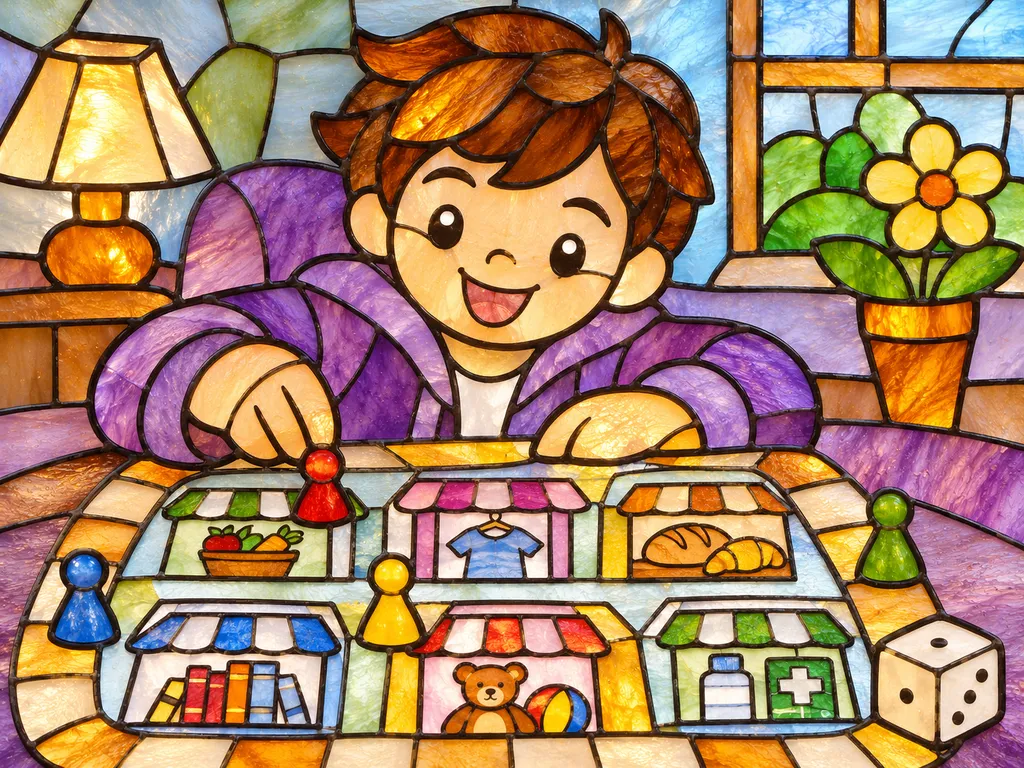
Fill a shopping bag with safe objects or picture cards. Your child takes one, names it and identifies its shop: “This is a pencil. We can buy it at a stationery shop.” Accept “store” if your child knows that form.
During one-to-one lessons with LearnLink tutors, this vocabulary supports listening, speaking and reading at the child’s level. Families can repeat the patterns during walks, list-making or map activities.
Three-minute Shop Challenge
Choose five household items. Your child names each item, chooses a shop and makes a full sentence. Award one point for the shop and one for the sentence. Next, request a different possible shop.
Common Mistakes with Shop Vocabulary
Children may confuse a place with its worker. A baker works in a bakery, a butcher at a butcher’s, and a florist in a florist’s or flower shop. Teach each pair, then ask: “Who makes bread?” and “Where can we buy bread?”
Articles and prepositions need practice. Say “at the bakery,” “from the bakery” and “in a toy shop.” On a map, use an article: “The bookshop is near the station.” For general statements, use the plural: “Bookshops sell books.”
Apostrophes in “butcher’s,” “florist’s” and “greengrocer’s” may puzzle older learners. The forms mean the butcher’s shop or florist’s shop. Younger children can learn each as one word. Correct spelling after the child uses the word confidently in speech.
- Choose three shop names and match each one to a familiar item.
- Contrast “shop” and “store” using two simple sentences from the article.
- Sort six picture cards by shop, then explain every choice aloud.
- Role-play one shopping exchange and correct misplaced words with gentle prompts.
- Review the final list and replace vague answers with exact shop names.
When a word has several meanings or pronunciations, Cambridge Dictionary is a useful check before turning it into child-friendly examples.
Frequently Asked Questions
How Many Shop Names Should a Child Learn at One Time?
Four or five names suit one short lesson. Names of Shops in English for Kids: Vocabulary and Activities works well when each word appears in a question, answer and game. Add shops after your child matches the first words with items and uses them in a sentence.
Should Children Learn “Shop” or “Store”?
Children can learn the form they hear most, while recognising both as correct. “Shop” appears more often in British English and “store” in American English. Fixed local forms include “bookshop,” “drugstore” and “chemist’s.” Recognising both helps children understand books, videos and conversations from different places.
What If a Shop Has No Direct Match in Our Town?
Use the closest English description and explain what the place sells. A local kiosk might serve as a newsagent’s, snack shop and convenience store. Children then learn that shop words describe a primary purpose, not every product inside.
How Can a Child Remember Shop Vocabulary?
Link each shop to an item, action and sentence. For example: “flowers—buy—the florist’s” becomes “We buy flowers at the florist’s.” Revisit words through picture sorting, maps, role-play and walks. Several brief rounds feel lighter than one long spelling session.
Start your child's English journey today — book a trial lesson with LearnLink.
Stay updated on our latest tips and resources by following us on Instagram LearnLink.